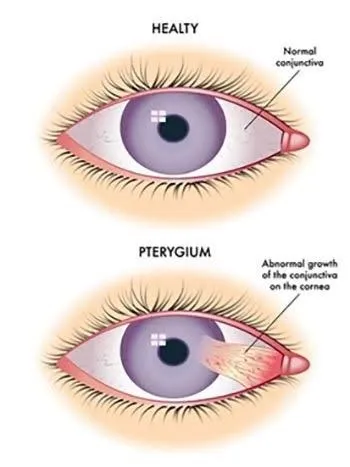
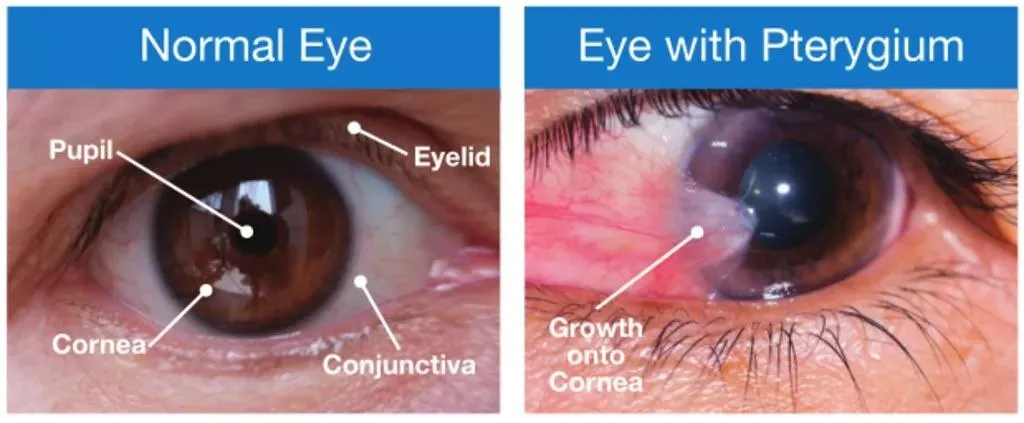
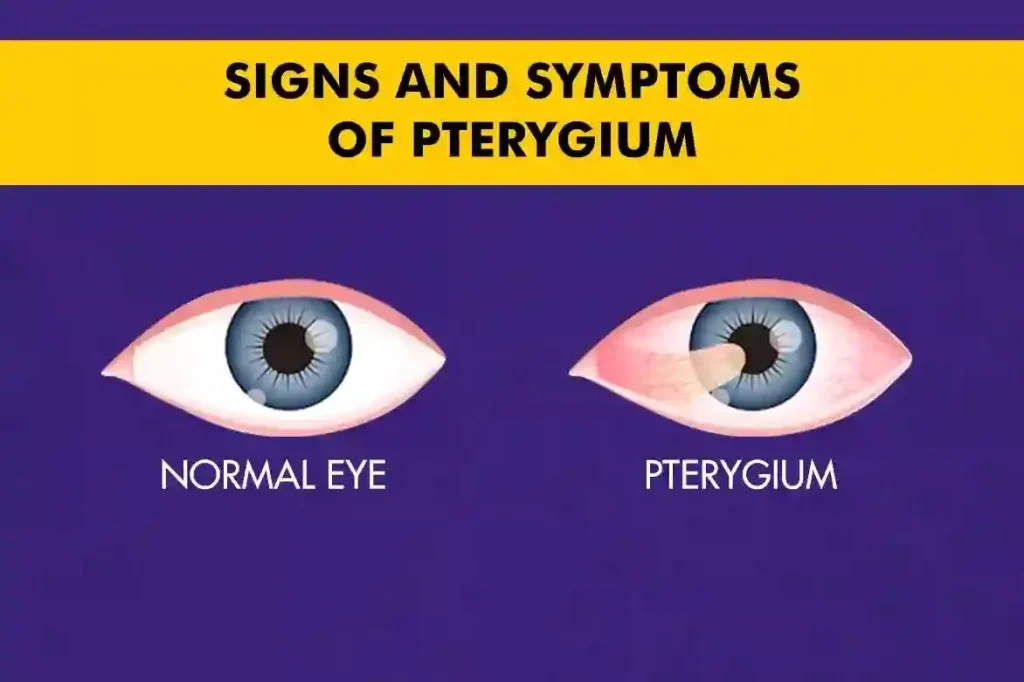
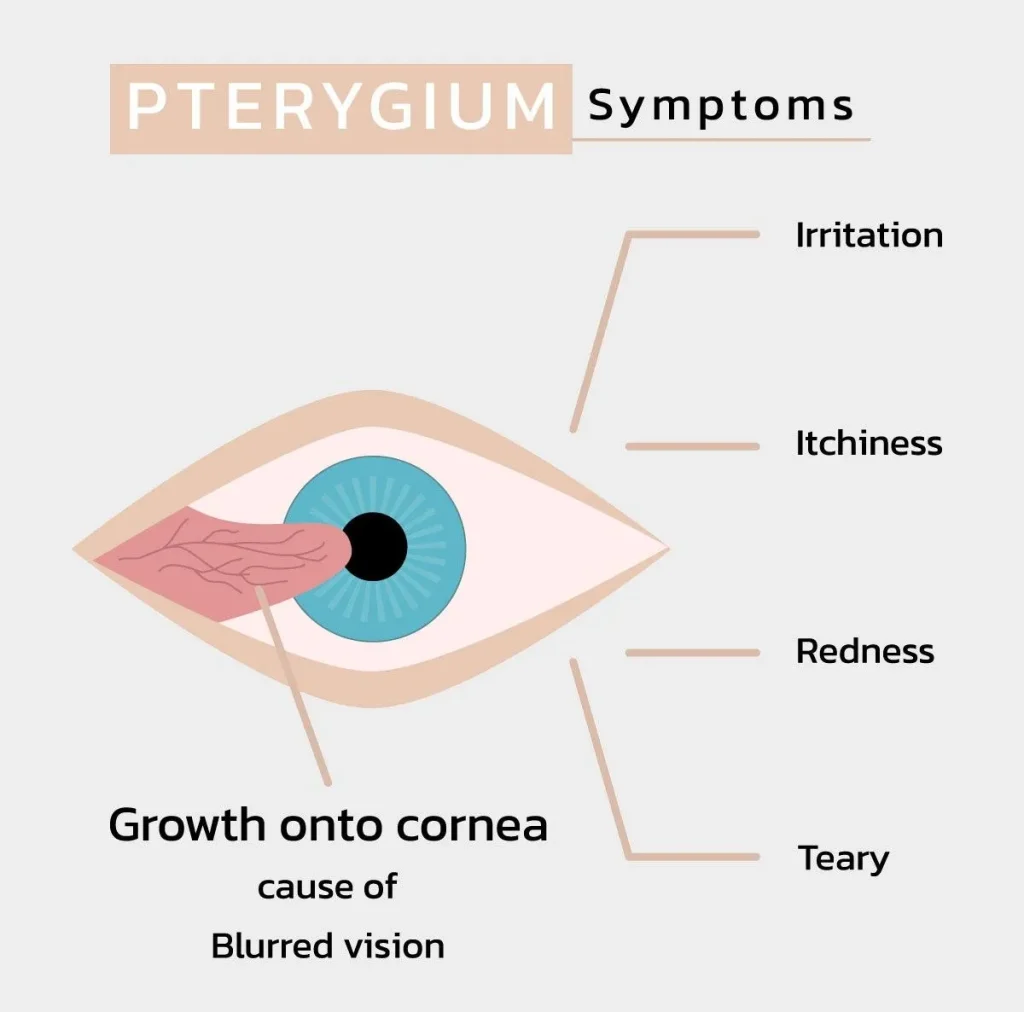
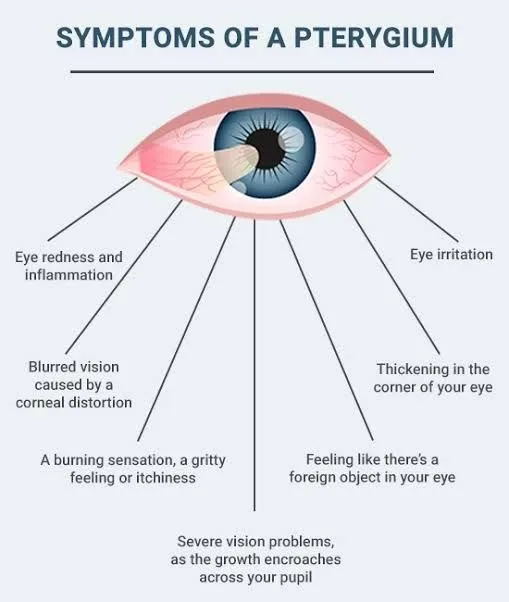
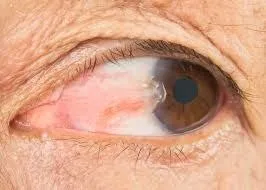
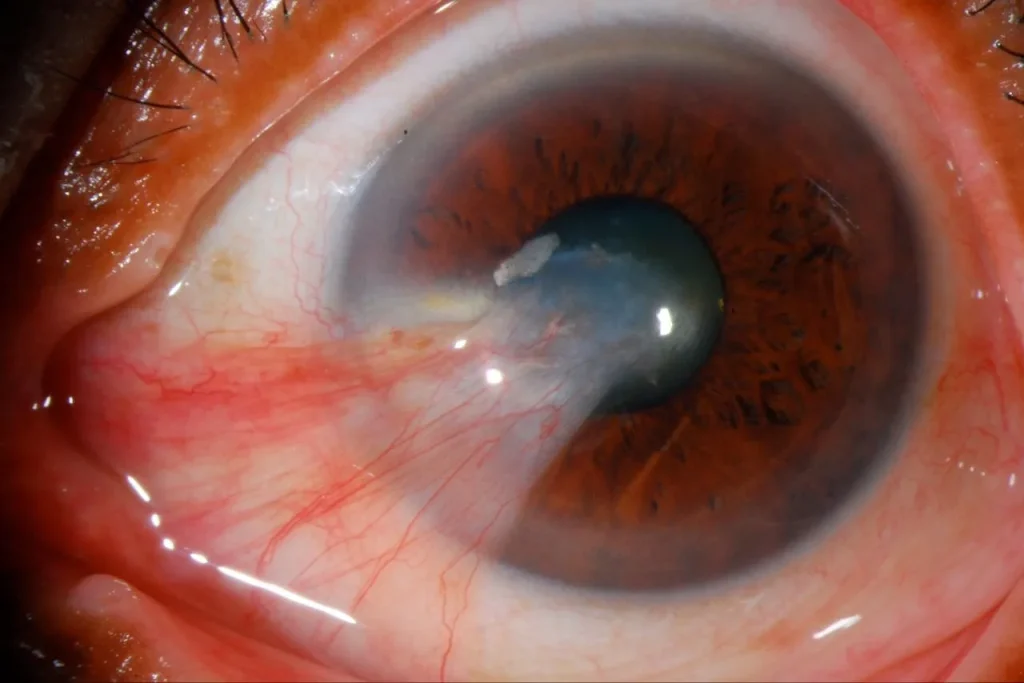
A pterygium is a benign, wedge-shaped growth of fleshy tissue on the conjunctiva — the clear membrane covering the white of the eye — that can gradually extend onto the cornea. It is commonly caused by prolonged exposure to ultraviolet (UV) light, wind, dust, and dry conditions, making it particularly prevalent in tropical and sunny climates. While initially it may cause only mild irritation or redness, a pterygium can progressively grow larger and encroach upon the cornea, leading to astigmatism and significant vision impairment.
Surgical removal is recommended when the growth threatens vision or causes persistent discomfort. Modern pterygium surgery often involves conjunctival autografting or amniotic membrane transplantation, techniques that significantly minimise the risk of recurrence — a common problem with older surgical methods. The procedure is performed on an outpatient basis with relatively quick recovery, allowing patients to return to their daily routine within a short period.