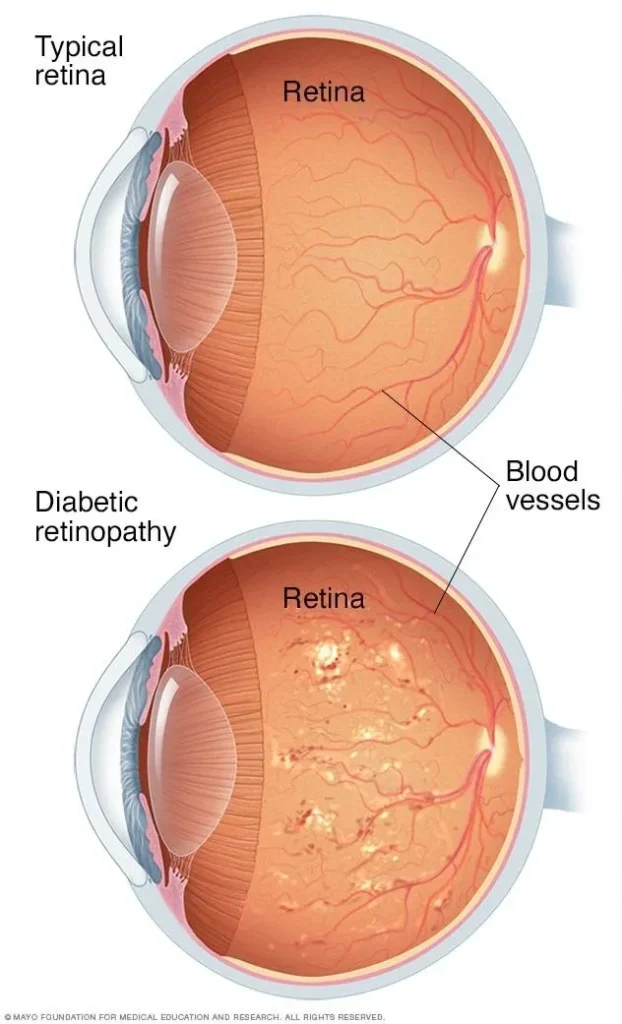
Diabetic retinopathy is a serious eye complication of diabetes that affects the blood vessels of the retina — the light-sensitive tissue at the back of the eye. Persistently high blood sugar levels damage the small retinal blood vessels, causing them to leak fluid, swell, or close off entirely. In more advanced stages, abnormal new blood vessels grow on the retinal surface, which are fragile and prone to bleeding, potentially leading to vitreous haemorrhage, retinal detachment, and severe vision loss or blindness.
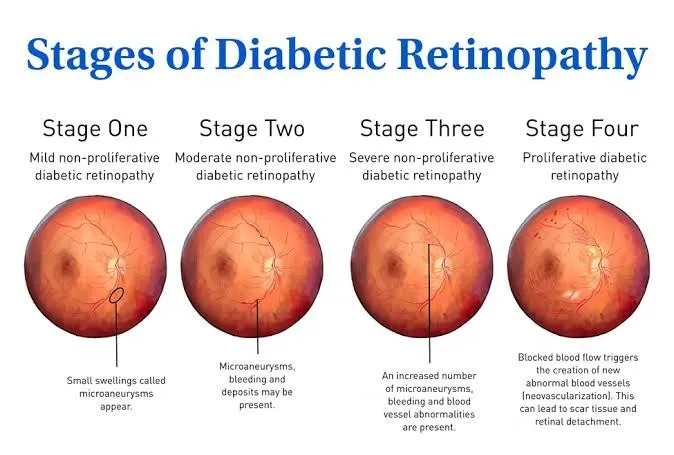
Diabetic retinopathy often develops without noticeable symptoms in its early stages, which makes regular screening absolutely essential for all diabetic patients. Treatment options depend on the stage and severity of the disease and may include laser photocoagulation to seal leaking blood vessels, anti-VEGF injections to reduce abnormal vessel growth and swelling, and vitrectomy surgery for advanced cases involving bleeding or retinal detachment. Close collaboration between ophthalmologists and diabetic care teams ensures the best possible outcomes.